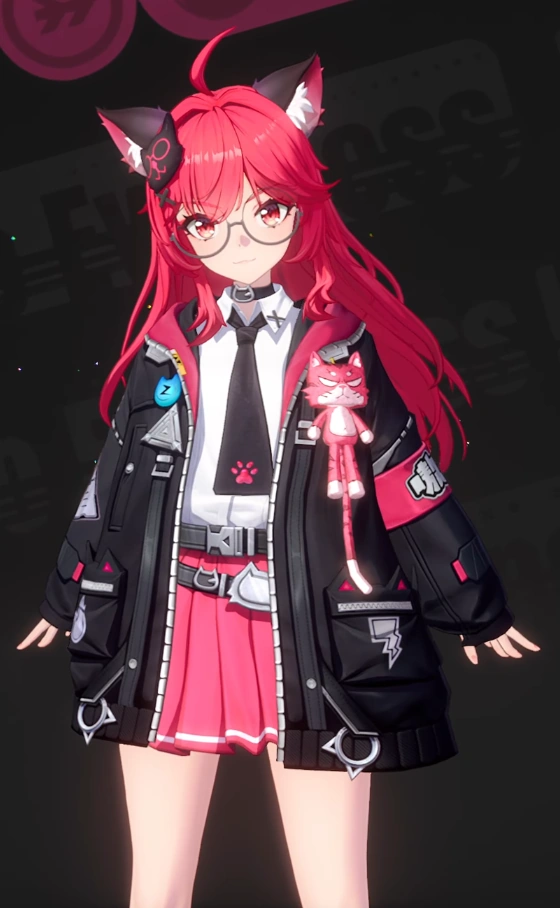
Gacha Pity System Explained: Rates, Soft/Hard Pity & No-Loss Banners
A complete breakdown of the Neverness to Everness (NTE) gacha system — S-rank rates, 70-pull soft pity, 90-pull hard pity, and the player-friendly no-50/50 limited banner.
Published: 2026/05/17
Key Answer: NTE character banner pity: hard pity at pull 90 (guaranteed current featured S-rank), soft pity starting at pull 70 (S-rank rate ramps up sharply). Limited banners do not use 50/50 — if you pull an S-rank, it is guaranteed to be the current featured character, and pity counts carry over between different limited banners. The base S-rank rate is about 0.99%.
Understanding the pity system is the first step to planning your gacha resources. This article lays out the pull rules for NTE character banners.
S-Rank Character Rates
Character banners have a base rate of about 0.99% to pull an S-rank character (roughly one in a hundred). Before soft pity kicks in (pulls 1 through 69), every pull holds this fixed rate. The base rate is not high, but the game has clear pity guarantees so your pulls are never wasted — what actually decides “how many pulls you spend on average” is not this 0.99%, but the soft/hard pity curve that follows.
A number that often gets overlooked: once you factor in the entire soft pity curve, starting from zero you will pull an S-rank in about 52.8 pulls on average, not 90. In other words, the 90-pull hard pity is the “worst-case ceiling” — most people will not pull all the way there.
Soft Pity: Rate Climbs Each Pull from Pull 70
When you go 70 pulls without getting an S-rank, the system triggers “soft pity” — from pull 70 onward, the S-rank rate is no longer 0.99% but climbs with each pull, approaching 100% by pull 89. The high-payout zone falls within these 20 pulls after pull 70.
The table below uses the same probability model that this site’s gacha simulator uses, listing the “per-pull S-rank rate” across the soft pity zone (values rounded; actual values follow in-game):
| Pull # | Per-Pull S-Rank Rate |
|---|---|
| Pull 69 (last pull before soft pity) | ~1.0% |
| Pull 70 (1st soft pity pull) | ~5.9% |
| Pull 72 | ~15.8% |
| Pull 75 | ~30.7% |
| Pull 78 | ~45.5% |
| Pull 80 | ~55.4% |
| Pull 83 | ~70.3% |
| Pull 85 | ~80.2% |
| Pull 88 | ~95.0% |
| Pull 89 | ~100% |
As you can see, the rate “ramps up linearly” rather than spiking suddenly on one particular pull. So the closer you get to pull 80, the “faster” the payouts start to feel.
Step-by-Step Soft Pity Math: Already at 70 With Nothing, Now What?
If you have already racked up 70 pulls with no S-rank, do not lose heart — by multiplying together the “miss” probability of each pull, you can calculate the cumulative chance of “getting one within the next N pulls”:
| Additional Pulls from Pull 70 | Cumulative Chance of at Least 1 S-Rank |
|---|---|
| 1 more pull (to pull 71) | ~10.9% |
| 3 more pulls (to pull 73) | ~40.6% |
| 5 more pulls (to pull 75) | ~69.4% |
| 7 more pulls (to pull 77) | ~88.3% |
| 10 more pulls (to pull 80) | ~98.6% |
| 15 more pulls (to pull 85) | ~100% |
Key takeaway: once you have built up to 70 pulls, having roughly 10 more pulls ready (about one 10-pull) gives you a nearly 99% chance of a payout. This is the mathematical basis for “soft pity is actually the real payout point.”
Hard Pity: Pull 90
By pull 90 at the latest, you are guaranteed the current featured S-rank character. This is the upper-limit guarantee on pulls — the ceiling the table above climbs to: no matter how unlucky you were earlier, pull 90 always closes it out.
In practice you will almost never actually pull to 90 — based on the curve above, the stretch from pull 70 to 80 absorbs the vast majority of payouts, and only the rare, extremely unlucky cases ever hit the 90-pull hard pity.
Cumulative Probability Overview: Pulling N Times from Zero
Combining the base-rate phase and the soft pity phase, here is the chance of getting at least 1 S-rank by pulling N times starting from fresh pity (pity = 0). These numbers match the output of the pull planner calculator (with “current pity = 0” entered):
| Pulls from Zero | At Least 1 S-Rank |
|---|---|
| 10 pulls | ~9.5% |
| 30 pulls | ~25.8% |
| 50 pulls | ~39.2% |
| 70 pulls | ~52.7% |
| 73 pulls | ~71.9% |
| 80 pulls | ~99.3% |
| 90 pulls | 100% (hard pity) |
This table lets you make a very practical decision: if you want to reliably pull a single limited character, “80 pulls” is a safe threshold (nearly 99.3%) — you do not need to stockpile the full 90. If resources are tight, 80 pulls is a target worth locking in.
Limited Banners “Can’t Lose”
One player-friendly aspect of NTE: limited character banners do not use a 50/50 system. Many similar games make you gamble again on “is it the featured character?” when you pull an S-rank, and losing leaves you with an old character. NTE has no such gamble — on a limited banner, any S-rank you pull is guaranteed to be the current featured character.
This has a big impact on planning: in other games, “pulling your target via pity” can cost up to 180 pulls in the worst case (90 to lose + 90 to guarantee), whereas in NTE the worst case is just 90 pulls to lock in your target character — effectively halving your worst-case budget. This site’s pull planner calculator therefore treats “pulling an S-rank” as equivalent to “pulling your target character,” without applying an extra 50% multiplier.

For example, with the limited character Nanally, any S-rank you pull on her banner is guaranteed to be her — no old character will ever show up.
Cross-Banner Carryover in Action: Pity Does Not Reset
Pity counts carry over between limited banners — progress you did not finish on one banner accumulates into the next limited banner. Here is a concrete scenario to illustrate:
- You built up 60 pulls on Nanally’s banner with no payout, ran out of Annulith, and had to stop.
- On the next limited banner, Lacrimosa, your pity count does not restart from 0 — it continues counting up from 60.
- That means you only need 30 more pulls to hit the pull-90 hard pity and get Lacrimosa outright.
Running the math on this scenario (pity 60, 30 pulls in hand): 60 + 30 = 90, which lands exactly on hard pity, for a 100% payout chance; if you only have 15 pulls in hand (reaching pull 75), the payout chance is about 73.7%. Plugging “current S-rank pity = 60” and “available pulls = 30 or 15” into the pull planner calculator reproduces these two numbers.
The strategic meaning of cross-banner carryover: unpaid-out pulls are not a sunk cost. You can comfortably stop on a half-built banner and save the progress for the next character you want more — extremely cost-effective for long-term planning.
A-Rank and Arc Pity
- A-Rank: every 10 pulls guarantees an A-rank or higher character/item (a 10-pull always shows at least a green glow). This guarantee settles every 10 pulls and is independent of the S-rank pity.
- Arc (weapon) banner: base S-rank rate is about 3%, with a double pity — a guaranteed S-rank Arc within 6 pulls and a guaranteed current featured Arc within 8 pulls. The Arc banner loses differently from character banners (it can give off-banner Arcs), so the “8 pulls to guarantee the featured one” figure is the number to watch when planning for weapons. For detailed resource planning, see the Equipment System Guide.
Debunking Common Player Misconceptions
Misconception 1: “A 0.99% rate means it takes 100 pulls on average to get one.” Wrong. The 0.99% only applies on pulls 1 through 69; from pull 70 the rate climbs rapidly. Factor in the whole curve and the average is about 52.8 pulls per S-rank, with the median landing just past 70 pulls.
Misconception 2: “Failing to pull means wasted pulls, and pity resets.” Wrong. Pity counts carry over between limited banners — the pulls you built up carry into the next banner. Stopping is not the same as wasting them — see the cross-banner carryover example above.
Misconception 3: “Pulling an S-rank might lose into an old character.” Wrong. NTE limited banners do not use 50/50 — any S-rank pulled on a limited banner must be the current featured character. This is also the key reason NTE saves more pulls than most similar games.
Misconception 4: “The rate secretly creeps up with each pull, rising from pull 1.” Wrong. Pulls 1 through 69 are a fixed 0.99% with no secret accumulation; the rate increase is soft pity, which only starts at pull 70. So “building up” only matters once you reach 70 — building up to 30 or 40 does not raise the per-pull rate.
Misconception 5: “For two S-rank characters, save 180 pulls for two hard pities.” Be careful. 180 pulls will almost certainly land 2 characters, but both payouts usually happen in the soft pity zone (around pulls 70–80), not exactly 90 each; budgeting 160 pulls (2 × the 80-pull safe threshold) is usually more than enough, and keeping the extra Annulith gives you more flexibility.
Planning Your Pulls
To turn the math above into decisions, remembering three thresholds is enough:
- 80 pulls: the “safe threshold” from zero, with about a 99.3% payout chance — save up to here first if you want to reliably pull one character.
- 90 pulls: the absolute ceiling, the hard pity guarantee, but rarely actually reached in practice.
- Cross-banner carryover: don’t stress about resetting if you don’t finish a banner — the progress carries to the next one.
Want to know whether your current pulls can land your target character? Use the pull planner calculator to enter your pity count and available pulls and calculate the probability directly; or try your luck with the gacha simulator to feel soft pity erupt after pull 70 firsthand. To earn a few extra pulls, don’t forget to grab free Annulith on the redemption codes page.
The probability data in this article is compiled from community sources and consists of modeled estimates; actual values follow in-game announcements.
FAQ
How many pulls is the NTE character pity? What is the difference between soft and hard pity? +
Neverness to Everness (NTE) character banners have a hard pity at pull 90, guaranteeing the current featured S-rank character by pull 90 at the latest; soft pity begins at pull 70, where the S-rank rate ramps up sharply. The zone where you actually get most of your S-ranks is after pull 70.
Can NTE limited banners "lose"? Could I pull an old character instead? +
No, you cannot lose. NTE limited banners do not use a 50/50 system — as long as you pull an S-rank on a limited banner, it is guaranteed to be the current featured character; you will never get an old character. For example, if you pull an S-rank on Nanally's banner, it is guaranteed to be her.
Does NTE pity carry over between banners? +
Yes. Pity counts carry over between limited banners — progress you did not finish on one banner accumulates into the next limited banner, which makes long-term pull planning very forgiving.
What is the pity system for the Arc (weapon) banner in NTE? +
The Arc banner has a base S-rank rate of about 3% and features a double pity — a guaranteed S-rank Arc within 6 pulls and a guaranteed current featured Arc within 8 pulls. For detailed resource planning, see the Equipment System Guide. Actual values follow in-game announcements.
Was this page helpful?
Related articles
Does Neverness to Everness (NTE) Have Dyes? Can You Dye Clothes? Full Appearance, Outfit & Vehicle Paint Guide
Neverness to Everness (NTE) Equipment Systems Explained: Arc, Gear & Substat (Affix) Priority