Is Neverness to Everness (NTE) Worth Playing? 2026 Review: Pros, Cons, Monetization Pressure & Who It Is For
Is Neverness to Everness (NTE) worth playing? An objective review of combat feel, art, progression pace and monetization friendliness, with an honest pros-and-cons list to help you decide whether to jump in.
Published: 2026/05/31
Key takeaway: NTE’s strengths are its art and the high freedom of its urban open world, plus a gacha pity system that “never loses” and is very friendly to free-to-play players; its weaknesses are that combat depth and story presentation are divisive among players, and low-end devices tend to stutter and crash. It is free and low-risk, so it is worth a few hours to try; but if you value hardcore combat feel or top-tier storytelling above all, you may want to lower your expectations first. A good fit for casual players who love exploring open worlds, collecting characters, and hate losing gacha 50/50s; not a great fit for those who only want the ultimate combat experience, or who have older hardware and cannot tolerate optimization issues.
“Is Neverness to Everness actually worth jumping into?” This is probably the most-asked question, and the hardest one to answer in a single sentence. This is an unofficial fan guide site, and this review will try to lay out both the pros and the pitfalls as neutrally as possible — subjective takes will be flagged as “players generally report”, while objective facts (free, platforms, pity mechanics) are stated directly, so you can make your own call.
What kind of game is this?
Neverness to Everness is a free urban-fantasy open-world gacha RPG developed by Hotta Studio and published by Perfect World. It launched globally in open beta on April 29, 2026, supporting four platforms — PC (Windows), iOS, Android, and PS5 — and has Traditional-Chinese servers for Taiwan, Hong Kong, and Macau.
Its premise is easy to grasp: a modern city + supernatural phenomena open world where you play a “Hunter” handling strange events around the city. You build a team of 4 and deal damage through “esper resonance” across 6 elements. Beyond combat, the city lets you drive cars, run an Uber for cash, open a shop, play mahjong, buy a home — even get a bounty put on you for assaulting people and get chased by the police. This kind of “urban sandbox” freedom is one of its most-praised features.
Under the hood it runs on Unreal Engine 5, so its visuals are top-tier among games of its kind.
Pros: what players love most
These are the points repeatedly praised in community impressions:
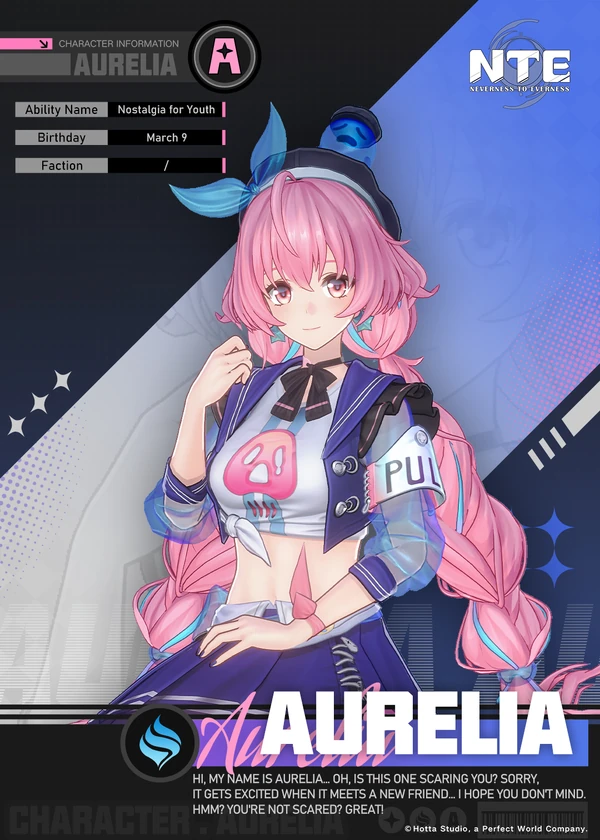
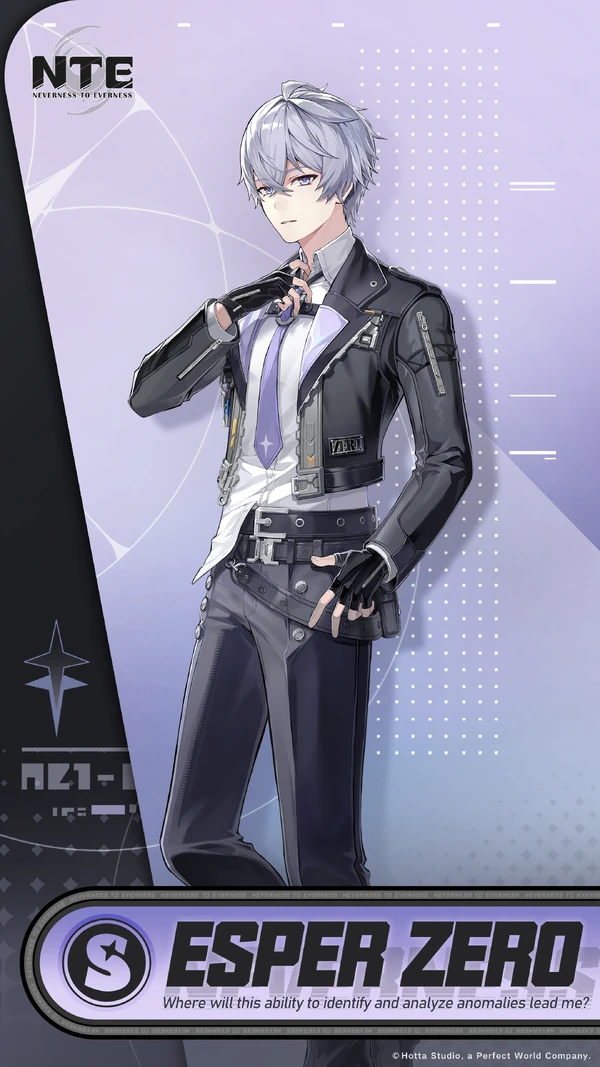
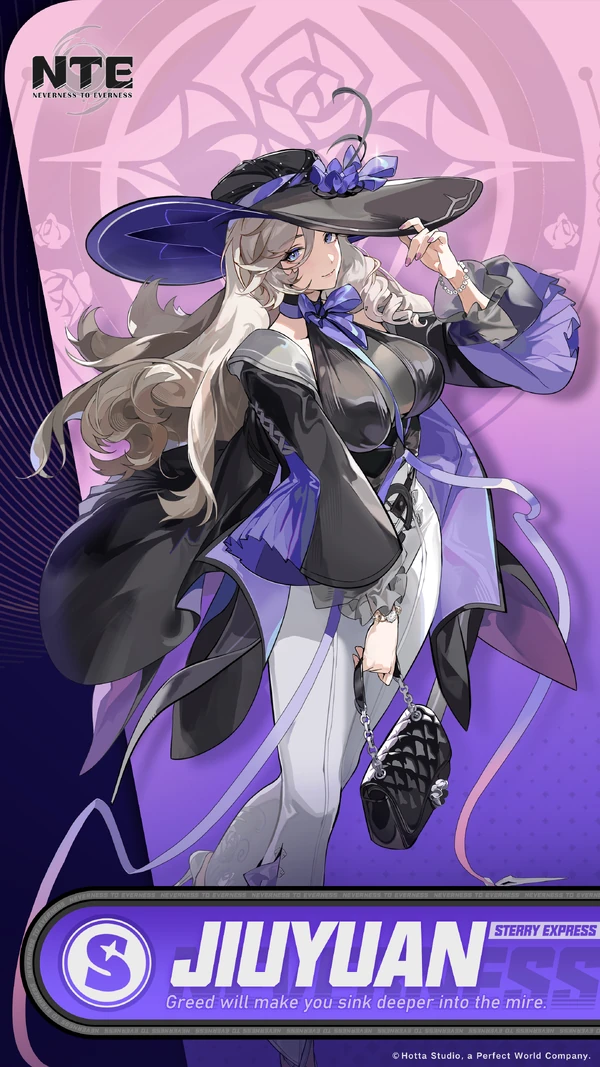
- First-rate art and environments: Players generally report that the visuals are refined and the neon-city atmosphere is strong, with many mentioning it gives them “Persona 5 (P5) vibes”. Built on UE5, the detail on both characters and the city is well-executed.
- High open-world freedom, lots of urban activities: You can drive cars, ride motorcycles, run a shop, do Uber gigs, fish, play mahjong, buy a home and live together with characters — and the money you earn can be exchanged for gacha items at the exchange. Players generally feel that “running map quests is more fun than expected because you can cruise around in a car and enjoy the scenery.”
- The gacha pity system “never loses” (this is an objective mechanic): The limited character banner has no 50/50 — as long as you pull an S-rank on a limited banner, it is guaranteed to be the current featured character, and pity counts carry over between different limited banners. The character banner has a hard pity at pull 90 and enters soft pity from pull 70; the limited weapon (Arc Disc) banner has pity at pull 60. This is its biggest selling point for free-to-play players.
- Generous launch rewards (objective fact): During open beta, completing specified tasks plus accumulating playtime can net you up to around 120 pulls, and you also get a selectable S-rank character and an S-rank Arc Disc. The barrier to entry for newcomers is very low.
- Combat is satisfying enough for casual players: Real-time action + perfect dodges that trigger bullet time, combined with resonance between adjacent elements, give the combat a certain amount of punch. The animation quality has also earned plenty of praise.
Cons and pitfalls: things you should know first
To stay neutral, this section will be blunt. Most of the following are subjective opinions players generally report, and individual mileage will vary:
- Lacking combat depth, divisive feel: This is the most contentious area. Some players feel the combat is a “Musou-style mow-down that easily devolves into mindless button-mashing”, lacking advanced combos and depth; others complain that enemy hit detection feels off and the dodge trigger window drags too long, making the feel “loose”. Players who love hardcore controls should take special note.
- Story presentation gets criticized: Players generally report that the cutscene presentation is “overwrought, with confusing shot composition and choppy animation”, that some chapters’ dialogue feels like awkward anime-style filler chatter, and that the narrative pacing sags in the back half. The story and characterization are rated by many as “average — nothing you fall in love with at first sight.”
- Optimization and crashing problems: This is one of the most-discussed downsides in the community. Players generally report that low-end PCs and older phones tend to stutter, overheat, drain battery fast, and even crash, and initial loading is on the long side (the PC install needs roughly 60GB of space). Some players even mention that high-end graphics cards still suddenly drop frames during intense color shifts under 4K full-vista ray tracing. One person bluntly said, “Fix the crashing and I will give it four stars.”
- Convoluted progression systems, stamina (resources) tied to progress: There are a lot of categories, attributes, and skill types in character progression, and it is easy for newcomers to get overwhelmed. Stamina is called “Nature Pixels”, regenerating about 1 point every 6 minutes, and there is a separate “Urban Vitality” bar that is consumed separately. NTE does not gate pace by handing out stamina; instead it controls it by capping your level — in other words, the main story gets blocked by level, forcing you to grind repeatable dungeons to level up and refill resources. Even in the early launch period some players reported that “in just one month you have to build two teams to clear the Abyss”, so anyone prone to progress anxiety will find it a bit grindy.
- Light on content (especially the music library, etc.) early on: Some players mention that at launch there were only about ten listenable records, and new records cost 300,000 — so the most engaging newcomer period is a touch short on content.
Overall, overseas and Taiwanese media reviews land somewhere “between mixed and positive” — the rough consensus is: this is a very ambitious game that wants to do everything, with a solid foundation and excellent art, but combat and story are not yet top-tier and it lacks a single “knock-it-out-of-the-park” memorable hook.
Monetization friendliness
First the objective part: NTE is free to fully progress through the story and experience the main content — all payment is optional.
Its monetization friendliness leans “relatively friendly” for the genre, the core reason being what was mentioned earlier — the limited banner never loses + a ton of free pulls at launch — which gives free-to-play players the lowest-risk pull planning. You can also slowly accumulate Ring Stones through daily Vitality clears, anomaly commissions, and exploring the open world.
But “friendly” does not mean “zero pressure”. The pressure points players generally report are:
- When you want to fully kit out a signature Arc Disc (weapon), or raise several teams at once to clear high-difficulty content, free resources clearly fall short.
- Light spenders generally consider the small monthly pass (about NT$30: 1 limited pull per day + stamina + Ring Stones, etc.) the best value, and the top pick for light spending; the Battle Pass (large monthly pass, about NT$128) gives limited pulls, an S-rank Arc Disc, an outfit, and a large amount of progression materials. Actual prices and contents are as shown in-game.
In one line: free-to-play is perfectly playable, light spending makes the experience much more comfortable, but it will not force you into heavy spending just to play.
Versus Genshin Impact / Zenless Zone Zero
If you are coming from Genshin Impact or Zenless Zone Zero, what you probably care about most is how it differs. A quick comparison:
- Genshin Impact: The most mature, with the most content (live for 5+ years), a fantasy-continent setting, and 50/50 gacha (you can lose).
- Zenless Zone Zero: The fastest-paced, built around 3-person high-speed chain combat, an apocalyptic-city setting, and gacha that is also 50/50.
- NTE: The newest in 2026, urban fantasy + 4-person teams + open-world sandbox, with gacha that never loses (the only one of the three) and the friendliest for free-to-play players; the trade-off is that combat depth and story polish are not yet up to the veteran studios.
For content depth pick Genshin Impact; for combat satisfaction pick Zenless Zone Zero; for a fresh setting + the friendliest gacha pick NTE. For a full point-by-point comparison (combat, pity, monetization barrier, cross-platform), see the three-game comparison.
Who is it for / not for
Worth jumping in if you…
- Love exploring the open world and prefer urban sandbox activities (driving, management, exploring) over hardcore monster-slaying
- Cannot stand losing gacha 50/50s and want the most straightforward pity system
- Are free-to-play / a light spender and want to plan your pulls with the lowest risk
- Enjoy collecting characters and the progression process, without being fixated on top-tier combat controls
- Want to try the newest 2026 urban-fantasy gacha — it is free anyway, and if it does not suit you, quitting costs little
Maybe think twice if you…
- Value combat depth and feel above all, and want complex combos and a high skill ceiling (NTE is divisive here)
- Have high demands for story presentation and narrative (currently one of its acknowledged weak points)
- Have older hardware (low-end PC / old phone) and cannot tolerate stuttering, overheating, or crashing
- Really dislike convoluted progression and the level-gating that forces you to grind dungeons
- Are already playing several gacha games with limited daily time, and might find one more a burden
Conclusion: NTE is not a “masterpiece”, but it is also far from a “dud”. It is a game with very obvious strengths and weaknesses — art and freedom are the highlights, combat and story are the shortcomings, and optimization depends on your device. The upside is that it is free with generous launch rewards, so the smartest move is to just download it and play for a few hours yourself — experiencing it firsthand beats any review.
If you want to dive in, starting from the beginner’s guide is the smoothest path; for more questions see the beginner FAQ; and if you are still undecided about how it stacks up against other games, circle back to the three-game comparison.
Frequently Asked Questions
Is Neverness to Everness worth playing? +
It depends on what you want. If you are after a new game with strong art, a high-freedom urban open world, and a gacha pity system that "never loses" and is very friendly to free-to-play players, NTE is worth a try — it is a free download, and you do not lose much if it does not click. But if what you care about most is "combat depth" and "story presentation", player opinion on NTE is fairly split on both, so read the cons section below before deciding.
Is monetization in Neverness to Everness heavy? +
Compared to similar games it is "relatively friendly", but it is not completely pressure-free. Its biggest advantage is that the limited character banner "never loses", plus the launch gives away a ton of free pulls, so a free-to-play player can slowly pull by hoarding Ring Stones. The pressure points are: when you want to fully kit out a signature Arc Disc (weapon), or raise several teams at once to clear high-difficulty content, free resources clearly fall short. Light spenders generally find the small monthly pass offers the best value. Actual resource costs are as shown in-game.
Does Neverness to Everness crash a lot or demand a lot from your device? +
Players generally report that on low-end PCs and older phones, NTE does tend to stutter, overheat, and even crash, and optimization is one of the most-discussed downsides in the community right now. The experience is much better on newer hardware. Before jumping in, check this site's system requirements to make sure your device can handle it.
How does Neverness to Everness compare to Genshin Impact and Zenless Zone Zero — which should I pick? +
All three are real-time action gacha RPGs. In short: for the most mature game with the most content, pick Genshin Impact; for the fastest-paced chain combat, pick Zenless Zone Zero; for the newest 2026 game with an urban-fantasy setting and the friendliest "never lose" gacha — ideal for free-to-play players — pick NTE. See this site's dedicated three-game comparison for a detailed point-by-point breakdown.
Information compiled from player community reviews (PTT C_Chat, Bahamut forum impressions, Dcard, Metacritic user ratings, and overseas media reviews, etc.). Subjective impressions vary from person to person; for objective mechanics and monetization details, please refer to the actual in-game situation.
Was this page helpful?